RTX 2080 and 2080 Ti Benchmarked | JayzTwoCents Review
RTX 2080 and 2080Ti Benchmarked – Is it worth it??
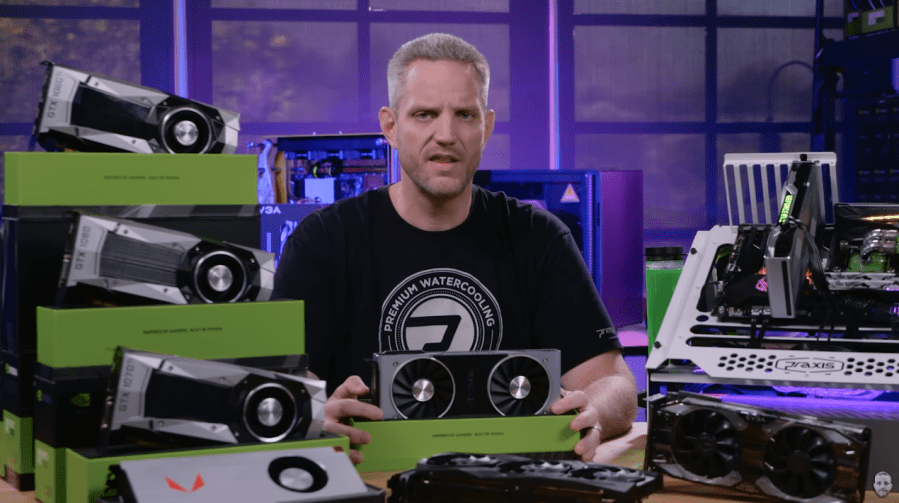
Unless you have been living under a large rock, it won’t have escaped your attention that Nvidia has brought its next-generation graphics microarchitectuer, known by the codename Turing, to market with the GeForce RTX 2080 Ti and GeForce RTX 2080 cards. The more mainstream GeForce RTX 2070 is due to follow next month.
It can be easily argued that Turing is the biggest mind shift in Nvidia’s GPU thinking for a long time; Turing borrows far more from workstation/server-focussed Volta than it does from Pascal. Not only that, Nvidia makes a bold play in the ray tracing stakes by dedicating specific RT cores for the purpose, while more than dabbling in the deep-learning field by integrating Tensor cores.
Appreciating the number of new technologies baked into RTX silicon requires reading of the architecture piece from last week. Summarising what you will find there, Nvidia packs in additional CUDA cores that are more efficient, improves caching, bumps up memory bandwidth, introduces deep-learning hardware in the form of those Tensor cores and, of course, that play for ray tracing.
Such observations automatically lend themselves to statements such as ‘forward-looking design’ and ‘all-new thinking’. That’s all well and good, but the gamer of today wants superlative performance now and in the future. Turing-based cards need to hit the ground running.
We say this because they are not cheap. Today’s dynamic duo, RTX 2080 Ti and RTX 2080, ship at a minimum $999 and $699, respectively – you can attach a 1:1 dollar-to-pound exchange rate, as well – and the truth of the matter is that retailer price gouging in the first few weeks means you will probably pay at least 10 per cent more than what’s quoted.
Early adopters can either go for an add-in card design from the likes of EVGA or Asus, or lay cash down on Founders Edition GPUs available from Nvidia directly. What’s also new this time around is FE cards are overclocked on the core, putting Nvidia’s partner cohort in a sticky situation. So without further ado, let’s formally introduce the FE pair and see how they perform against a number of other high-profile cards from Nvidia and AMD.
 Computer Tech Trends